Showing posts with label Sycamores. Show all posts

Friday, October 14, 2011

Ivy: Does it Strangle Trees?

I am actually now back in Los Angeles, but I still have a lot of catching up to do from when I was in Wales. There the ivy was rampant on the trees, who's characters it completely changed according to the pattern of its growth.

It has often been said that ivy strangles trees, but this seems to be a misconception. Ivy naturally reaches for the sun, needing it to gain sufficient levels of photosynthesis. In this process, if it covers the crown of the canopy it can affect the photosynthesis of its host and it can- by covering the trunk- create a humid environment where fungus or bacterial organisms can flourish. However, the general opinion seems to be that the tree will only suffer seriously from this if it is already declining. On the plus side- apart from the decorative- ivy can support many forms of wildlife, such as providing roosting, hibernating and nesting sanctuary for animals, birds and insects.

The trees I am about to show here are all around Manorbier, where I was staying in Wales, and because of the prevalence of Sycamores there, most of the trees are Sycamores.

As result of the fear of ivy damaging trees, people will often cut its stems near the base of the tree. This will cause the ivy gradually to die, the host being left with a tracery of dead stems, as in the next three images:


I like the fact that you can see the pattern on the bark of this tree where the ivy once grew, while another stem is still alive:


Now for a contrast- a tree trunk smothered in blossoming growth:


And there is something wonderful about an ivy-smothered wood...


this wood reminding me of Lewis Carol's descriptive phrase of a "tulgey wood" in his Jabberwockey:


Whereas this next display seems to be a delightful peace of design:


And on these next two images I love the different textures of ivy, lichen and moss:


This seems to me to be another example of an ivy design project:


Here the bark of the Sycamore is gleaming from Welsh rain, a contrast to the elegant strands of ivy:


And here again it is the juxtaposition of the bark and the ivy that appeals to me:


Now, apart from being decorative, ivy on a tree can be quite spooky, as I find in the following images:


Finally, walking up a lane surrounded by ivy-covered tree trunks, at first I thought this was yet another one- until I raised my eyes and saw it was a telegraph pole!

Friday, August 26, 2011

Tree Seeds, Nuts or Fruits?

The more I write about trees the more I realize how little I actually know. As an artist, I just look at what attracts my interest and although I'm always naturally curious as to "what" the tree, bird or flower is it is not my primary concern: hence my ignorance!

This month- August- one is constantly aware of trees' ripening seeds, both on the branches and the ground. I happily photograph them and then suddenly wonder, what is this? is it a seed? is it a nut? is it a fruit? I then find it is a minefield and I am more confused than ever...for some info click here.

In this post I am, as usual, being subjective- just showing what I will loosely call the "seeds" of trees that I have seen over the last few weeks. For economy, I won't include what we generally think of as fruit- apples, plums etcetera.

I will start with a favourite Oak tree of mine in Ilford's Valentines Park- a wonderful ancient tree, covered in Acorns:


I love the patterns the fallen acorns make on the soil:


And there is something so endearing about a glossy acorn in its cup!


But what is NOT so endearing is what I have only recently discovered on oak trees- the Knopper galls. This is caused by the Knopper Wasp which lays its eggs on the acorns, thus effecting the tree's fecundity and the reproductive ability. Apparently it was introduced into this country in the 1960's- so I am surprized I have not noticed these weird distortions earlier:


Now to come to Fir Cones- Here I learn you have both male and female cones, the smaller male cones passing their pollen to the females before falling off the trees. This first image is of two maturing female cones on an Oregon Douglas Fir in Kew Gardens- apparently by September it will be shedding its seeds:


These next two images are of Cones on trees in the grounds of Woburn Abbey. Unfortunately, I have not yet ascertained the names of the trees. Does anyone recognize them from the cones and needles?


These next attractive little cones I saw in Leamington's Jephson Gardens- but again don't yet know the name of the tree...


Whereas these next oddities, on a Cupressus sempervirens pyramidalis, I saw in Hidcot Garden:


These are the "nuts" of an Alder tree in Valentines Park:


Now for the "flying" seeds or Keys: most of us remember as children dropping the wings of the Sycamore trees (not to be confused with the London Plane tree also known as a Sycamore in the US) for the pleasure of watching them spiraling rapidly to the ground:


The seeds of this Lime tree (also in Valentines Park) are hanging from ingenious wing-like leaves called "bracts" which fly the seeds away from the tree:


Hornbeams also carry their seeds on bracts but in large clusters:


Now Ash keys I always find magic- as a child I was quite convinced they really were functional keys! Although in clusters, their keys are single, carrying a single seed. First, I am showing some glossy new ones and then some ripened brown ones, which can remain on the trees throughout the Winter:


Another tree I saw in Leamington's Jephson Gardens was the American Yellow Buckeye, Aesculus flava, with its striking striped, early Autumnal foliage and nut-like seeds:


And another tree I saw in Hidcote Gardens was this Chinese Handkerchief tree- Davidia involucrata. (this link is well-worth reading, to hear of the adventures of the botanist who introduced it to Kew in 1899):


The pom-pom like seeds of the Plane tree are another great favourite of mine!


This next image is of a nut from a Copper Beach. The spiny burs on their cases (which hold two nuts) serve the purpose of attaching themselves to the fur of passing animals and thus distributing them further afield.


And here is the edible nut of the Sweet Chestnut tree in its amazing, spiky case:


I will conclude with my favourite of all-time, the Horse Chestnut nut, better known as a Conker, due to its fame in the game of Conkers. What could be more desirable than this wonderfully patterned, burnished fruit of the Conker Tree?


Tuesday, June 21, 2011

May in Manorbier

Well, it is now nearly the end of June- Midsummer Day as I start writing this- but I spent all May house/dog sitting for artist Philip Sutton and his wife Heather in Manorbier, in South West Wales. I have written of this Paradise previously- their house surrounded by wondrous trees, flowers, birds and even their own delectable meadow; a short walk through the small village, down a lane, past a castle and there is the sea! What more could you want? So I had a blissful time, drawing and painting the trees and meadow and photographing them all as well as the sea...

Having five weeks of rich experiences, I will divide this post into four parts:

PART ONE: TREES

Now, as I'm writing about May in Manorbier, it is only right that I should start with May blossom- so here it is, at the top of the meadow, first in the morning and then in the evening, lit with the sun's last "glow":


Here, we see the last of the sunset through a Sycamore tree...


And now we come to some of my very favourite Sycamore trees, that I am totally obsessed with, loving their strange, sculptural qualities:


And lurking under this last magnificent Sycamore, we find Le Maestro- artist Philip Sutton- at work!


This pretty little Apple tree was in blossom in the Allotment- behind it you see the meadow:


These Bay trees were recently pruned to give more light in the house, and now remind me of Italian paintings:


PART TWO: ROCKS

Now to see the wonders of Manorbier's beach :

I spoke of the Sycamores being sculptural, but what could be more sculptural than some of these extraordinary, ancient, folded and eroded Old Red Sandstone rocks, of layers of Devonian mudstone and thin sandstone (Click here for more details) :


PART THREE: SEA AND SAND

Still on the beach, here the freshwater stream approaches the sea:


and then makes patterns in the sand:


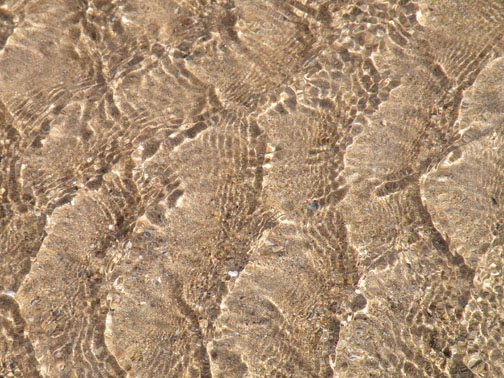
And now patterns are formed by the sea water:


The excitement of walking down to the beach every day was that moment of anticipation, not knowing exactly what magical sights you would see. You were very rarely disappointed.


PART FOUR: FLOWERS, BIRDS, BUTTERFLIES

Walking back, away from the sea, there were many charming wild flowers; here are a few of them:


And the odd butterfly- here a Tortoiseshell enjoys a hawksweed flower:


Back in the garden, a Red Admiral rests on the bark of an Elm tree:


The Meadow was just beginning to bloom:


Plantains delighted me:


Leaving the meadow, in the garden are the aromatic flowers of a Myrtle tree:


In the Allotment, the Chard gives one another visual shock:


Poppy's are also always rewarding:


Though this next pink one was actually in a neighbour's garden:


but not this pink rose:


I have already mentioned how important the birds are there- they have an elaborate array of nut-baskets etc which are constantly fully occupied! As with the sea, it is always exciting to watch. While I was there, I was delighted to see this Greater Spotted Woodpecker (apologies for the poor photo- he caught me unawares!) :


This pair of Goldfinches were regularly there, later bringing their fledgelings to a nearby tree (I always love the fact that a flock of these brilliantly coloured birds is called a "charm"- they are undeniably charming! ):


I will end this post with a bird who forever both charms and moves me with his most melodious song- the Blackbird. It is always the Blackbird's song that I miss most when I am in Los Angeles and it was the Blackbird's song that contributed to my bliss as I stood in the Meadow painting the wildflowers and feeling I was in Paradise: